
Airway-Focused Orthodontic Guidance for Healthier Jaw Growth, Breathing, and Long-Term Function
Orthodontics that looks beyond straight teeth — focusing on airway, jaw growth, tongue posture, nasal breathing, and oral muscle function.
At Dr. Hana Khan, DDS — Airway Dentist, myofunctional orthodontics is used to help uncover why teeth may be crowded, jaws may be narrow, or breathing patterns may be affecting oral and facial development.
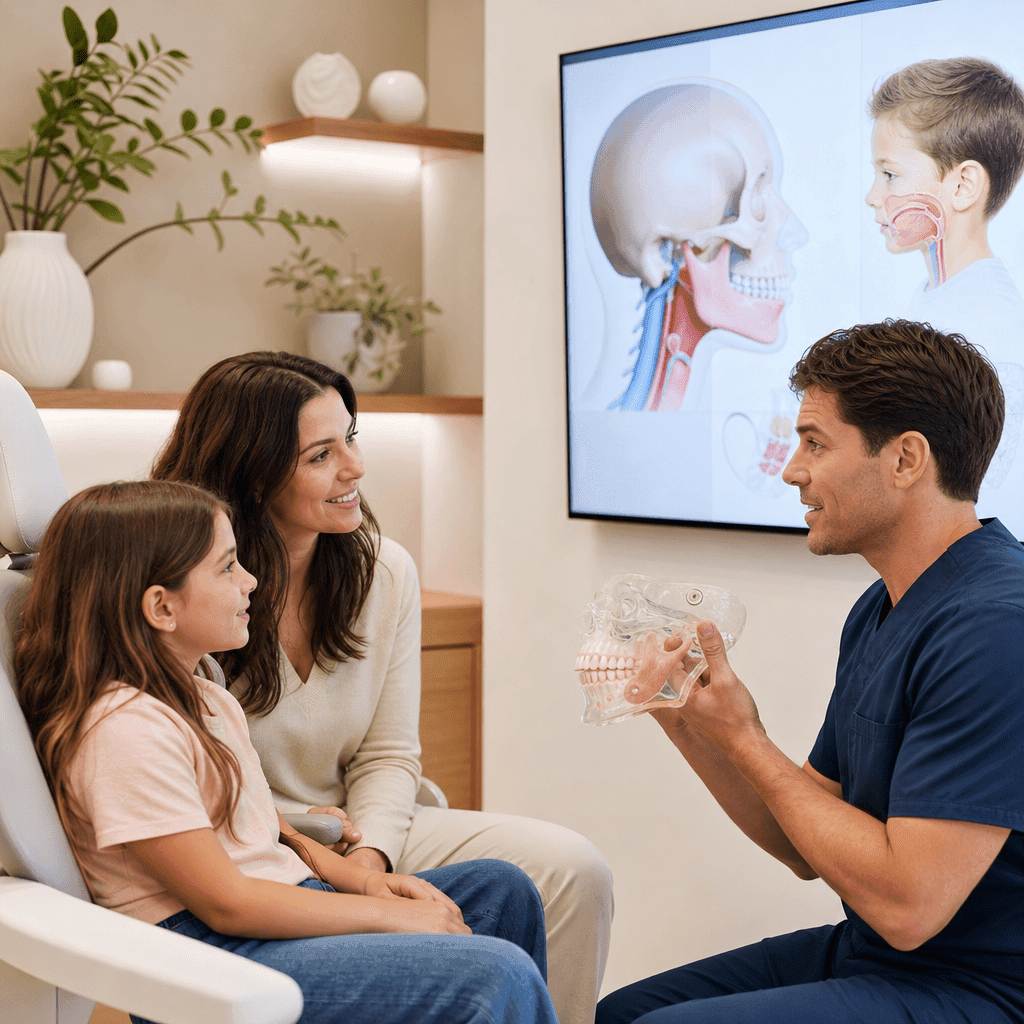
A Root-Cause Approach to Crowded Teeth, Mouth Breathing, and Jaw Development
Located in Torrance, CA, Dr. Khan serves children, teens, and adults throughout the South Bay and surrounding Los Angeles County communities with an airway-centered, education-focused approach to orthodontic concerns.
Looking for a myofunctional dentist near you or functional orthodontics near Torrance? Dr. Hana Khan helps patients understand the root causes behind crowded teeth, mouth breathing, narrow arches, poor sleep, and airway-related dental development.
Many people assume crooked or crowded teeth are simply genetic. While genetics can play a role, orthodontic problems are often connected to how a person breathes, rests their tongue, swallows, chews, and uses their oral and facial muscles.
Myofunctional orthodontics asks important questions such as:
- Is the tongue resting properly on the palate?
- Is the patient breathing through the nose or mouth?
- Are the jaws developing wide enough to support the teeth and airway?
- Is poor oral posture contributing to crowding or relapse?
- Are snoring, sleep issues, or mouth breathing affecting growth?
- Could orthodontic concerns be signs of a deeper airway issue?
By looking at these underlying factors, Dr. Khan can help patients and parents better understand the why behind crowded teeth, narrow palates, open bites, overbites, mouth breathing, and other orthodontic concerns.
What Is Myofunctional Orthodontics?
Myofunctional orthodontics focuses on the relationship between orthodontic development and oral muscle function. It evaluates how the tongue, lips, cheeks, jaw, and breathing patterns influence the way teeth and jaws grow.
Traditional orthodontics often focuses on aligning teeth. Myofunctional orthodontics takes a broader view by considering tongue posture, nasal breathing, lip seal, swallowing patterns, oral habits, jaw development, palate width, facial growth, airway space, sleep and breathing symptoms, and long-term orthodontic stability.
The Goal Is Healthier Function
The goal is not just a straighter smile. The goal is healthier function, better airway support, improved oral posture, and more stable long-term results.
Why Crowded Teeth May Be Connected to Mouth Breathing
Crowded teeth are often a sign that the jaws did not develop with enough space. One of the major factors that can influence jaw development is breathing.
When a child breathes through the mouth instead of the nose, the tongue often rests low in the mouth rather than gently against the palate. Over time, this may contribute to narrow upper jaw development, high or vaulted palate, dental crowding, open bite tendencies, long-face growth patterns, poor lip seal, snoring or restless sleep, and orthodontic instability after braces.
The tongue plays a natural role in shaping the upper jaw during growth. When the tongue rests properly against the palate and nasal breathing is working well, it can support healthier arch development. When the tongue sits low due to mouth breathing, tongue-tie, allergies, enlarged tonsils or adenoids, or oral habits, jaw growth may be affected.
Signs in the Smile
Your child may benefit from a myofunctional orthodontic evaluation if you notice crowded teeth, narrow dental arches, high or narrow palate, open-mouth posture, tongue thrust swallowing, open bite tendencies, or orthodontic relapse after treatment.
Signs in Breathing and Sleep
Parents may notice mouth breathing during the day or night, snoring or noisy breathing, restless sleep, teeth grinding, difficulty keeping lips closed, dark circles under the eyes, bedwetting beyond the expected age, difficulty focusing, or daytime fatigue.
Signs in Habits and Posture
Other signs can include thumb sucking or prolonged pacifier habits, forward head posture, frequent cavities related to dry mouth, and oral habits that may influence jaw growth or airway development.
These signs do not always mean your child has a serious airway problem, but they are worth evaluating early.
Myofunctional Orthodontics for Children
Childhood is an important window for growth and development. Because the jaws are still growing, early evaluation may help identify patterns that could affect facial development, breathing, sleep, and orthodontic stability.
For children, myofunctional orthodontics may focus on encouraging nasal breathing, improving tongue posture, supporting better lip seal, identifying oral habits that affect jaw growth, evaluating palate width and dental crowding, coordinating care when enlarged tonsils, adenoids, allergies, or tongue restriction may be involved, and supporting healthy facial and airway development.
The goal is to guide growth in a healthier direction whenever possible, rather than waiting until all permanent teeth erupt and then simply straightening what developed.

Myofunctional Orthodontics for Teens and Adults
Myofunctional orthodontics is not only for children. Teens and adults can also benefit from an airway-centered evaluation, especially if they have had orthodontic relapse, chronic mouth breathing, poor tongue posture, snoring, clenching, or unresolved functional concerns.
For teens and adults, treatment planning may focus on understanding why crowding or relapse occurred, improving oral posture and muscle function, supporting nasal breathing, addressing tongue thrust or dysfunctional swallowing, evaluating airway-related orthodontic concerns, improving long-term orthodontic stability, and coordinating care with orthodontists, ENTs, sleep physicians, or other providers when needed.
While adults are no longer growing in the same way children are, improving oral function and breathing patterns may still play an important role in comfort, stability, and long-term airway health.
Braces Alone May Not Solve the Root Cause
Braces and aligners can move teeth, but they do not always correct the muscle patterns or breathing habits that contributed to the problem in the first place.
If the tongue continues to rest low, if mouth breathing continues, or if dysfunctional swallowing patterns remain, teeth may be more likely to shift after orthodontic treatment.
Function Supports Stability
This is why myofunctional orthodontics often works together with myofunctional therapy. By improving the function of the tongue, lips, cheeks, and breathing patterns, patients may have a better foundation for orthodontic stability.
How Myofunctional Therapy and Orthodontics Work Together
Myofunctional therapy helps retrain the muscles of the mouth and face. It focuses on proper tongue posture, nasal breathing, lip seal, chewing, swallowing, and oral rest posture.
When paired with orthodontic care, myofunctional therapy may help address functional issues such as low tongue posture, tongue thrust, mouth breathing, poor lip seal, dysfunctional swallowing, oral habits, muscle imbalance, and orthodontic relapse patterns.
This combined approach can help patients build healthier habits that support the results of orthodontic treatment.
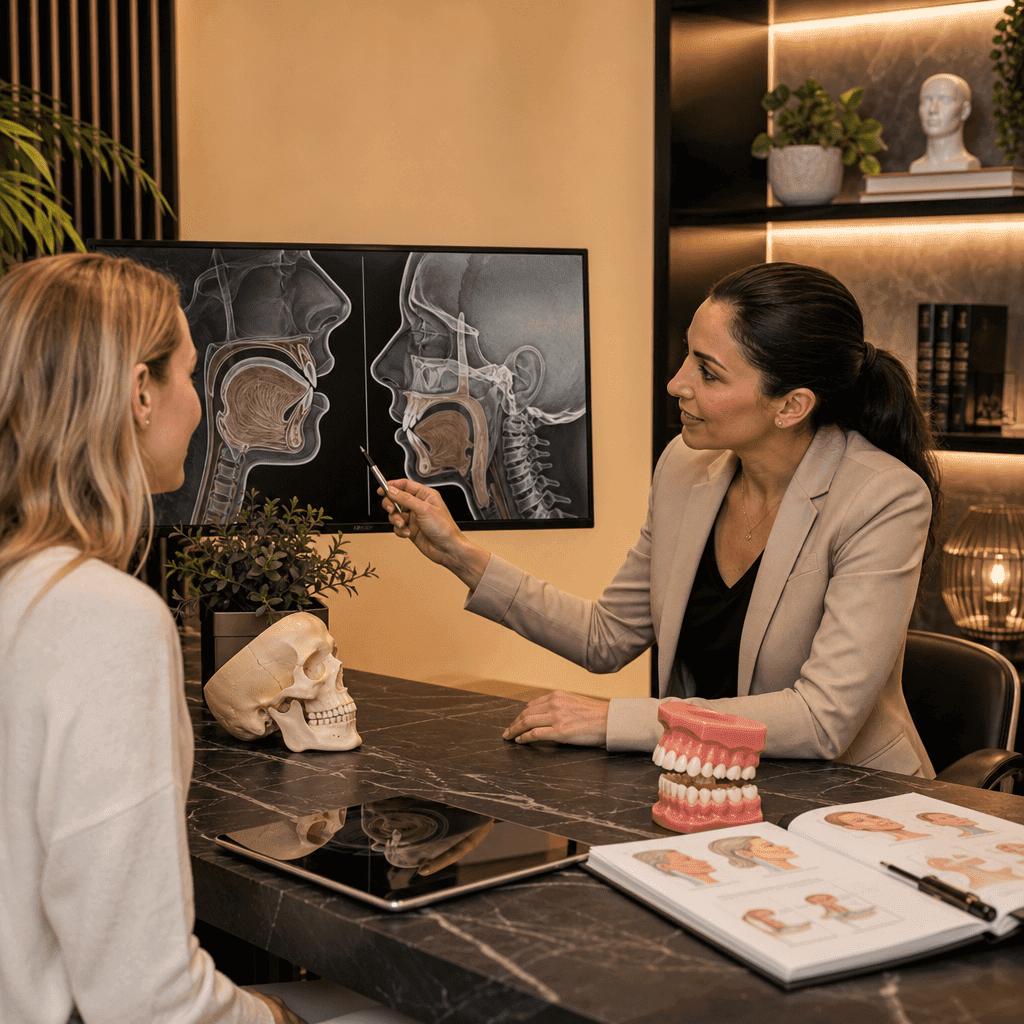
What Makes Dr. Hana Khan’s Approach Different?
Dr. Hana Khan is a UCLA School of Dentistry graduate and airway-focused dentist with training in airway-centered dentistry and orofacial myology. She evaluates orthodontic concerns through a broader airway and functional lens.
- Root-cause focused — looking beyond cosmetic alignment
- Airway-centered — considering breathing, sleep, and jaw development
- Education-based — helping patients understand the why behind recommendations
- Collaborative — coordinating with other healthcare providers when appropriate
- Personalized — using detailed assessments to guide treatment planning
Dr. Khan treats airway-centered dental cases as both a dentist and orofacial myologist, allowing her to evaluate the relationship between oral structure, muscle function, breathing, and long-term health.
Advanced Airway and Myofunctional Assessments
Depending on the patient’s needs, Dr. Khan may use a combination of evaluations to better understand airway, breathing, and oral function. These may include a myofunctional exam, tongue posture and swallow evaluation, airway-focused dental exam, CBCT imaging when appropriate, high-resolution pulse oximetry, rhinomanometry, evaluation of palate width and jaw development, assessment of nasal breathing and oral posture, and review of sleep and breathing symptoms.
These tools help Dr. Khan create a more complete picture of what may be contributing to orthodontic concerns.
Traditional Orthodontics vs. Myofunctional Orthodontics
| Traditional Orthodontics | Myofunctional Orthodontics |
|---|---|
| Focuses mainly on tooth alignment | Looks at teeth, jaws, airway, tongue posture, and muscle function |
| Often begins after crowding is obvious | Encourages early detection of growth and breathing issues |
| Uses braces or aligners to move teeth | May combine orthodontic guidance with myofunctional therapy |
| Treats the position of teeth | Evaluates why the teeth became crowded |
| May not address mouth breathing or tongue posture | Focuses on breathing patterns, oral posture, and function |
| Retainers help maintain results | Functional habits may support long-term stability |
Both approaches can be valuable. Myofunctional orthodontics simply expands the focus to include the underlying habits, structures, and breathing patterns that influence orthodontic health.
Conditions and Concerns Myofunctional Orthodontics May Help Evaluate
Patients often seek care for concerns such as crowded teeth, narrow palate, mouth breathing, snoring, poor sleep, open-mouth posture, tongue thrust, orthodontic relapse, jaw development concerns, high palate, crossbite tendencies, open bite tendencies, poor facial muscle tone, lip incompetence, teeth grinding, and airway-related orthodontic issues.
A consultation can help determine whether these concerns are related to oral function, airway development, nasal breathing, or other contributing factors.
Serving Torrance, the South Bay, and Los Angeles County
If you are searching for a myofunctional dentist near me, functional orthodontics near me, or myofunctional orthodontics in Torrance, Dr. Hana Khan offers airway-centered evaluations for children, teens, and adults.
Communities Served
Dr. Hana Khan sees patients from Torrance, Redondo Beach, Hermosa Beach, Manhattan Beach, Palos Verdes, Rolling Hills, Lomita, Carson, Gardena, San Pedro, Long Beach, El Segundo, Hawthorne, and surrounding South Bay and Los Angeles County communities.
Schedule a Myofunctional Orthodontic Evaluation in Torrance
If your child has crowded teeth, mouth breathing, snoring, poor sleep, or jaw development concerns, an airway-focused orthodontic evaluation can help you better understand what may be happening beneath the surface.
Dr. Hana Khan takes the time to explain findings clearly and help families understand the connection between breathing, tongue posture, jaw growth, and orthodontic health.
Dr. Hana Khan, DDS — Airway Dentist
3500 Lomita Blvd, Unit 201
Inside Smile HQ
Torrance, CA 90505
Call today to schedule a myofunctional orthodontic consultation.
FAQ: Myofunctional Orthodontics
Myofunctional orthodontics is an airway- and function-focused approach to orthodontic development. It looks at how tongue posture, nasal breathing, swallowing, oral habits, and facial muscle function influence jaw growth, tooth alignment, and long-term stability.
No. Children may benefit because they are still growing, but teens and adults can also benefit from evaluating tongue posture, mouth breathing, orthodontic relapse, and airway-related concerns.
Mouth breathing may contribute to low tongue posture and altered jaw development, which can be associated with narrow arches and dental crowding. Not every case is the same, which is why a detailed evaluation is important.
The tongue naturally rests against the palate and helps support upper jaw development. When the tongue rests low in the mouth, the palate may develop narrower, which can contribute to crowding and airway concerns.
No. Braces and aligners move teeth. Myofunctional orthodontics looks at the muscle function, breathing patterns, and oral posture that may have contributed to the orthodontic problem. In some cases, myofunctional therapy and orthodontic treatment work together.
Dr. Hana Khan sees patients at 3500 Lomita Blvd, Unit 201, inside Smile HQ, Torrance, CA 90505, serving Torrance, the South Bay, and surrounding Los Angeles County communities.